Die 7 Hebel für höhere Tagessätze als Interim Manager
June
17
,
2026
2026
Die 7 Hebel für höhere Tagessätze als Interim Manager
Die 7 Hebel für höhere Tagessätze. Erfahren Sie von Ulvi Aydin und Georg Larch, wie Sie Ihre Expertise richtig monetarisieren und höhere Tagessätze durchsetzen.
Seit 2014 gestaltet Georg Larch Interim-Mandate wie ein Architekt: Er kennt die Logiken von Venture Capital und Management im Detail und besetzt C-Level-Rollen in komplexen Sondersituationen passgenau. Dabei bringt er unabhängig von der Branche Persönlichkeiten ins Unternehmen, die mit ihrer Expertise und ihrem kulturellen Fit verändern, statt nur zu verwalten.Ulvi I. Aydin ist Founder & CEO der AYCON Management Consulting und Founder & CEO des anspruchsvollen Business Netzwerks AMERITUM, preisgekrönter Interim Manager, Beirat, Aufsichtsrat, Unternehmens- und Unternehmer-Entwickler und Buchautor.
*
Minuten
Warum exzellente Interim-Projekte oft unter Wert verkauft werden – und wie Sie durch gezielte Positionierung Ihre Tagessätze neu definieren.
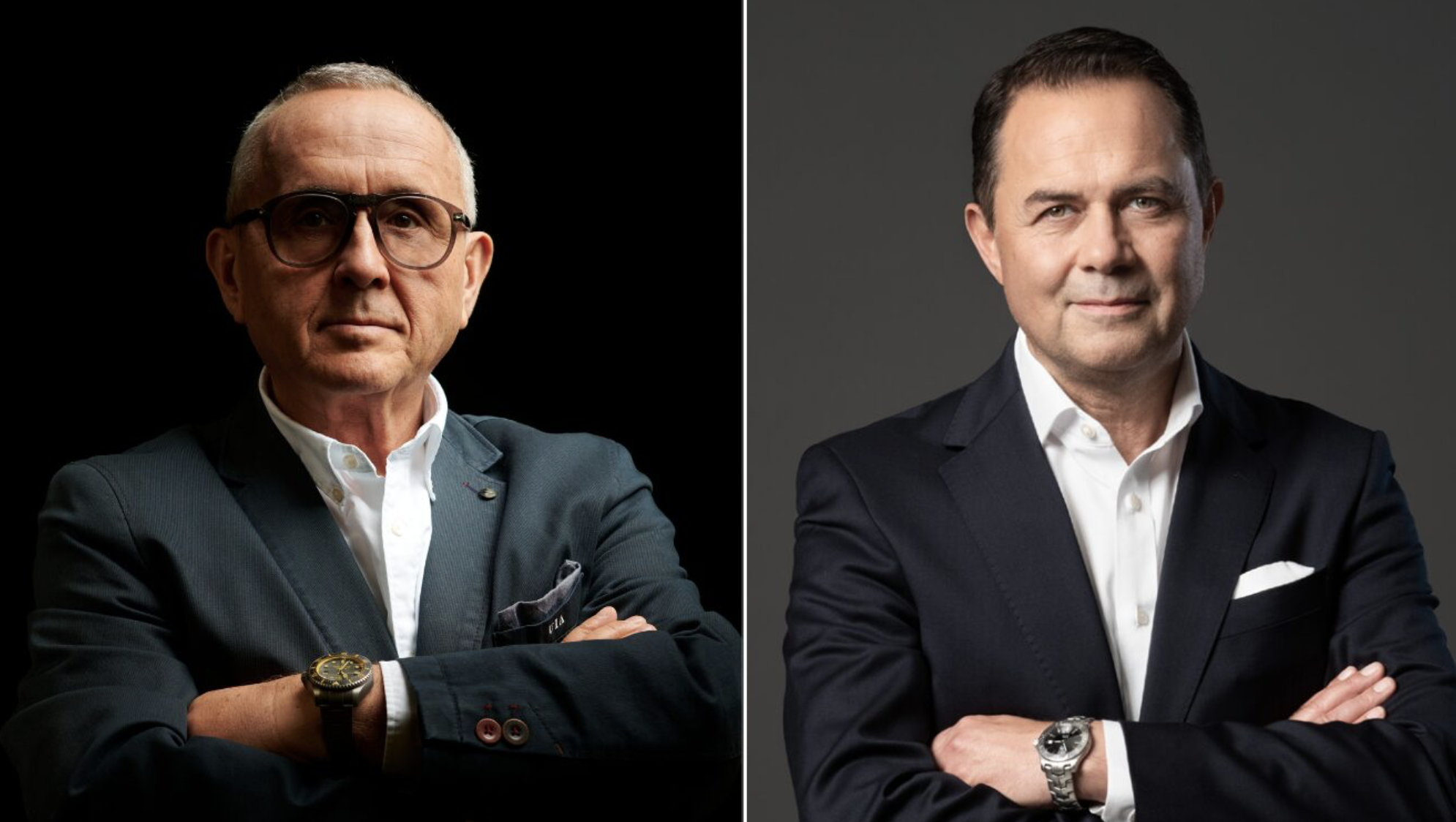
Seit 2014 gestaltet Georg Larch Interim-Mandate wie ein Architekt: Er kennt die Logiken von Venture Capital und Management im Detail und besetzt C-Level-Rollen in komplexen Sondersituationen passgenau. Dabei bringt er unabhängig von der Branche Persönlichkeiten ins Unternehmen, die mit ihrer Expertise und ihrem kulturellen Fit verändern, statt nur zu verwalten.
Ulvi I. Aydin ist Founder & CEO der AYCON Management Consulting und Founder & CEO des anspruchsvollen Business Netzwerks AMERITUM, preisgekrönter Interim Manager, Beirat, Aufsichtsrat, Unternehmens- und Unternehmer-Entwickler und Buchautor.
May 15, 2026
2026
Ulvi AYDIN (Jahrgang 1960) ist preisgekrönter Premium Executive Interim Manager (DDIM)Unternehmens- und Unternehmer-EntwicklerBeiratXING-InsiderSpeakerMarkenbotschafterBuchautor - AYCON BücherDEUTSCHE BÖRSE GRUPU zetifizierter und qualifizierter Aufsichtsrat:devider:Als international agierender Interim-CEO und -CSO unterstützt er mittelständische Unternehmen und Konzerne bei Marken- und Marktentwicklung, Neu-Positionierung, Restrukturierung und Vertriebsexzellenz. Als international agierender Interim-CEO und -CSO unterstützt er mittelständische Unternehmen und Konzerne bei Marken- und Marktentwicklung, Neu-Positionierung, Restrukturierung und Vertriebsexzellenz. AYDIN ist … … Mitglied im IBWF - Institut & Beraternetzwerk qualifizierter Unternehmensberater, Steuerberater, Wirtschaftsprüfer, Rechtsanwälte und Notare für den Mittelstand - IBWF… Mitglied im Berufsfachverband "Die KMU Berater-Bundesverband freier Berater e.V.“. - KMU Berater… zertifizierter BAFA Berater und zertifizierter „BERATER OFFENSIVE MITTELSTAND“. - BAFA… Mitglied im DDIM - Dachgesellschaft Deutsches Interim Management e.V. - DDIM … Mitglied im ArMiD, Aufsichtsräte Mittelstand in Deutschland e.V. - ArMIDZertifizierter & Qualifizierter Aufsichtsrat - DEUTSCHE BÖRSE GROUP - DEUTSCHE BÖRSE Über seine Erfahrungen als Interim Manager schreibt er in diversen Wirtschaft-Medien (Wirtschaftswoche, SpringerProfessional, Transformations-Magazin, Controller Magazin, Harvard Business Manager, etc.).
*
Minuten
About Ulvi I. AYDIN
Ulvi I. AYDIN: Als international agierender Interim-CEO und -CSO unterstützt er mittelständische Unternehmen und Konzerne bei Marken- und Marktentwicklung, Neu-Positionierung, Organisations-Entwicklung, Restrukturierung und Vertriebsexzellenz.

MEETING CULTURE: DON’T WASTE TIME.
Most companies don’t have a meeting culture. They have a meeting addiction.
After 35 years in management, 25 executive mandates and experience across 16 different industries, I have seen one corporate disease almost everywhere:
Too many meetings. Too many people. Too much talking. Too little action.
People sit in meetings because they were invited.
They invite others because they might be needed.
They discuss things that have already been discussed somewhere else.
And then they schedule another meeting to follow up on the meeting.
This is not management. This is organized waste.
I am convinced that at least 50% of all internal meetings could be killed tomorrow without damaging the business. In many cases, the opposite would happen: the organization would become faster, sharper and more productive.
And there is another number I always look at.
If 70–80% of your meeting time is spent internally and only 20–30% with customers, partners and the market, something is seriously wrong.
Your customers are outside.
Your competitors are outside.
Your opportunities are outside.
Your market share is outside.
So why the hell are you sitting inside talking to yourselves?
Here are my 10 rules for a ruthless, effective and efficient meeting culture:
1. KILL HALF OF YOUR MEETINGS.
Start there. Don’t optimize useless meetings. Eliminate them. If nobody can clearly explain what decision, action or result a recurring meeting produces, delete it.
2. STOP INVITING SPECTATORS.
A meeting is not a cinema. If 15 people are invited but only five actually contribute, ten people are wasting their time. Invite contributors, decision-makers and owners. Nobody else.
3. IF YOU HAVE NOTHING TO CONTRIBUTE, DON’T ATTEND.
Your calendar invitation is not a court summons. If you cannot contribute, decide or learn something essential, decline. And if you realize during the meeting that you are useless there: leave.
4. STOP TALKING TO YOURSELVES. GO TO THE CUSTOMER.
When internal meeting time massively exceeds customer-facing time, your priorities are upside down. Every hour of internal corporate self-entertainment has an opportunity cost. Spend more time where the business actually happens: in the market.
5. KILL REDUNDANCY.
Three meetings discussing the same topic with slightly different groups are not alignment. They are organizational incompetence. One topic. One owner. One discussion. One decision. One execution.
6. DON’T REPEAT WHAT SOMEBODY ELSE JUST SAID.
Corporate meetings are full of people rephrasing the previous speaker to demonstrate their own relevance. Stop it. If it has been said, it has been said. Add something or shut up.
7. NO MEETING WITHOUT AN OUTCOME.
Every meeting must have a purpose: decide something, solve something, create something or assign action. “Exchange”, “alignment” and “update” are too often corporate camouflage for having no real objective. Meetings must produce movement.
8. CAMERAS ON. PERIOD.
In a virtual meeting, switching your camera off without a good reason is the digital equivalent of sitting in a conference room with your back turned to everyone. It signals distance and disengagement. If you attend, be present. Visibly.
9. DON’T CONFUSE A FULL CALENDAR WITH PERFORMANCE.
Eight meetings a day do not prove that you are important. They may prove that you have lost control of your time. Being permanently busy is not a badge of honor. Results are.
10. END WITH WHO DOES WHAT BY WHEN.
A meeting without clear actions, owners and deadlines was probably just a conversation. No vague “we should”. No “somebody needs to”. Name the owner. Name the action. Name the deadline. Then execute.
And one final thought:
Internal meetings do not create market share. Execution does. Customers do. Markets do.
So look at your calendar tomorrow morning.
Ask yourself three questions:
Do I really need to be there?
Does this meeting really need to exist?
Would this hour create more value if I spent it with a customer?
Then start deleting.
Your calendar should not document how busy you are.
It should reveal what your priorities are.
KILL MEETINGS.
KILL REDUNDANCY.
GET OUT INTO THE MARKET.
AND GET SHIT DONE.
THE GOLD MINE MOST SALES ORGANIZATIONS IGNOREStop hunting only for new customers. Start hunting for the customers you lost.Most sales organizations focus on two things:Taking care of existing customers.Winning new customers.Both are important. Both are right.But there is a third category — and in many companies, it is almost completely ignored.Customers who bought from you before.Customers who knew your products.Customers who knew your people.Customers who trusted your company.Customers who once gave you their business.And then they stopped.They haven't bought from you for two, three, maybe four years. Somewhere along the way, they made a different decision. They chose another supplier. They moved to a competitor.I call them NO CUSTOMERS or WHITE CUSTOMERS.And they are one of the biggest hidden gold mines in sales.Why?Because these are not cold prospects.They already know you. There was a relationship. There was trust. There was business.Something happened.Maybe you disappointed them.Maybe your competitor was faster.Maybe someone offered a better solution.Maybe your organization simply stopped paying attention.Whatever the reason: they left.:devider:And now comes the uncomfortable part:Winning them back is hard work.Much harder than sending another friendly email to an existing customer.You have to hunt.You have to understand why you lost them. You have to demonstrate why they should reconsider their decision. And above all, you have to be persistent.:devider:Here is one of my rules:THE 10-TOUCH RULEAssume that you need to approach a lost customer at least ten times before you have a realistic chance of getting them interested again.Not once.Not twice.TEN TIMES!Call them.Visit them.Talk to them.Listen to them.Show genuine interest.Understand what changed.Bring them something valuable.Come back again.And again.And again.:devider:Tell them clearly:WE WANT YOU BACK.This requires a different kind of salesperson.You need people with communication skills, persistence and resilience.You need people with a HUNTING SPIRIT.Salespeople who don't disappear after the second unanswered call. Salespeople who don't interpret the first "no" as the end of the conversation. Salespeople who have the ambition to win back business that was lost.Because lost customers are not dead customers!They are customers currently buying from somebody else.And every order they place with your competitor is a reminder that there is market share waiting to be won back.So go into your CRM.Look back three or four years.Identify every customer who used to buy from you and no longer does.Give every one of them an owner.Build a WIN-BACK LIST.Track the contacts. Track the visits. Track the opportunities. Track the orders.And then execute relentlessly.DON’T MOURN THE MARKET SHARE YOU HAVE LOST. GO AND WIN IT BACK.The gold is already there.You just have to dig for it.
Die Kunst, sich nichts vorzumachen – Radikale Ehrlichkeit für Menschen, die mehr wollen als Ausreden
Motivation gibt es genug, Wahrheit ist seltener. In diesem Podcast sprechen Ulvi I. Aydin, preisgekrönter Premium Executive Interim Manager, Beirat, Autor, Unternehmens- und Unternehmer-Entwickler, und sein Sohn Vincent U. Aydin über die unbequemen Wahrheiten hinter Erfolg, Führung, Entscheidungen und persönlicher Entwicklung. Hier stellen sie die Fragen, die viele lieber vermeiden: – Warum scheitern Menschen trotz guter Absichten? – Weshalb halten wir an Gewohnheiten fest, die uns schaden? – Und woran erkennen wir, dass wir uns selbst etwas vormachen? In dem Podcast zum neuen gleichnamigen Sachbuch „Die Kunst, sich nichts vorzumachen – Wie radikale Ehrlichkeit dein Leben verändert“ diskutieren Vater und Sohn über Führung, Vertrieb, Unternehmertum, Verantwortung, Leistungsbereitschaft und die Kunst, den eigenen moralischen Kompass nicht zu verlieren. Dabei treffen jahrzehntelange Management-Erfahrung und eine jüngere Perspektive aufeinander – direkt, kontrovers und ohne Weichspüler. Dieser Podcast richtet sich an Menschen, die sich selbst hinterfragen wollen. An Führungskräfte, Unternehmer, Vertriebsprofis, Macherinnen und Macher. An alle, die lieber Klarheit als Ausreden suchen. Denn Veränderung beginnt dort, wo Ehrlichkeit unbequem wird. Hier vorbestellen! Das Sachbuch „Die Kunst, sich nichts vorzumachen – Wie radikale Ehrlichkeit dein Leben verändert“ von Ulvi I. Aydin und Vincent U. Aydin erscheint im Oktober 2026: https://amzlink.to/az0bs53yAiW0V Abonniere gerne diesen Podcast, um keine Folge zu verpassen. Fragen, Themenwünsche, Feedback an die Hosts: Anastasia.kabitzsch@aycon.biz Infos & Links: https://www.aycon.biz/ Moderation: Birgit Eschbach https://www.linkedin.com/in/studiovenezia/ Der Podcast ist eine Produktion von Studio Venezia – The Podcast Company http://www.studiovenezia.de
A CLEAR MANDATE. A CLEAR TARGET. EVERYTHING ELSE IS SECONDARY.Whenever I accept a mandate, I start with one fundamental question:What exactly am I here to achieve?Because a clear mandate must lead to a clear target.And once that target is clear, I believe we have to subordinate almost everything else to achieving it.Not politics.Not traditions.Not “this is how we have always done it.”Not processes that have become an end in themselves.Not endless explanations about why something cannot be done.:devider:If a process does not help us reach the target, challenge it.If a process step does not create value, eliminate it.If a meeting does not move us forward, question it. Leave it! Don't waste your time! Nor the other's time!If an activity does not contribute to winning, stop doing it.That is what execution means to me.:devider:And the same principle applies to leadership and teams.I don't need people who are brilliant at explaining yesterday.I can tell you last week's lottery numbers myself.I can also tell you what yesterday's weather was.Both statements may be perfectly accurate.And both are completely useless for deciding what we do tomorrow.The rear-view mirror is small for a reason. It helps us understand where we came from. But you cannot drive a company forward by staring into it.:devider:We need people who look through the windshield.People who say:This is our target. This is my responsibility. This is what I am going to do. And this is when I will deliver it.That is the mindset I want around me.Of course, people should challenge assumptions. They should debate the best route. They should bring better ideas. I expect that.But once the direction and target are clear, we cannot endlessly renegotiate the destination.Discuss the HOW. Improve the HOW. Challenge the HOW.But execute relentlessly against the WHAT.I once worked with an entrepreneur who expressed this philosophy very clearly. His message was essentially:This company has a defined ambition and direction. If you want to pursue an entirely different ambition according to entirely different rules, you are free to build your own company and do exactly that.It sounds tough.But there is an important truth behind it.A company is not an academic discussion club.We have responsibilities.To our shareholders.To our customers.To our staff.To the people whose jobs depend on the competitiveness and long-term success of the business.And leadership means accepting that responsibility.Owners give us a mandate. Customers expect us to perform. Employees expect us to create a company with a future.That requires choices.It requires saying NO to activities that consume energy without creating progress.It requires saying NO to complexity that protects the past instead of building the future.And sometimes it requires saying NO to comfortable explanations and asking instead:What are YOU going to do about it?For me, this is one of the central principles of any serious transformation or battle plan:CLEAR MANDATE.CLEAR TARGET.CLEAR PRIORITIES.FULL COMMITMENT.RELENTLESS EXECUTION.Everything we do must ultimately answer one question:Does this help us achieve our target?If yes: Do it. Accelerate it. Scale it.If no:Stop it.
Wenn Sie auf "Alle Cookies akzeptieren" klicken, stimmen Sie der Speicherung von Cookies auf Ihrem Gerät zu, um die Navigation auf der Website zu verbessern, die Nutzung der Website zu analysieren und unsere Marketingmaßnahmen zu unterstützen. Weitere Informationen finden Sie in unserer Datenschutzrichtlinie.