Ulvi and Vincent Aydin on the future of family businesses

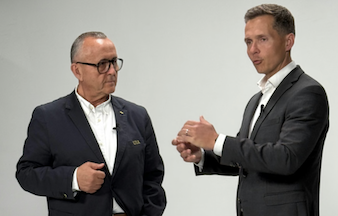
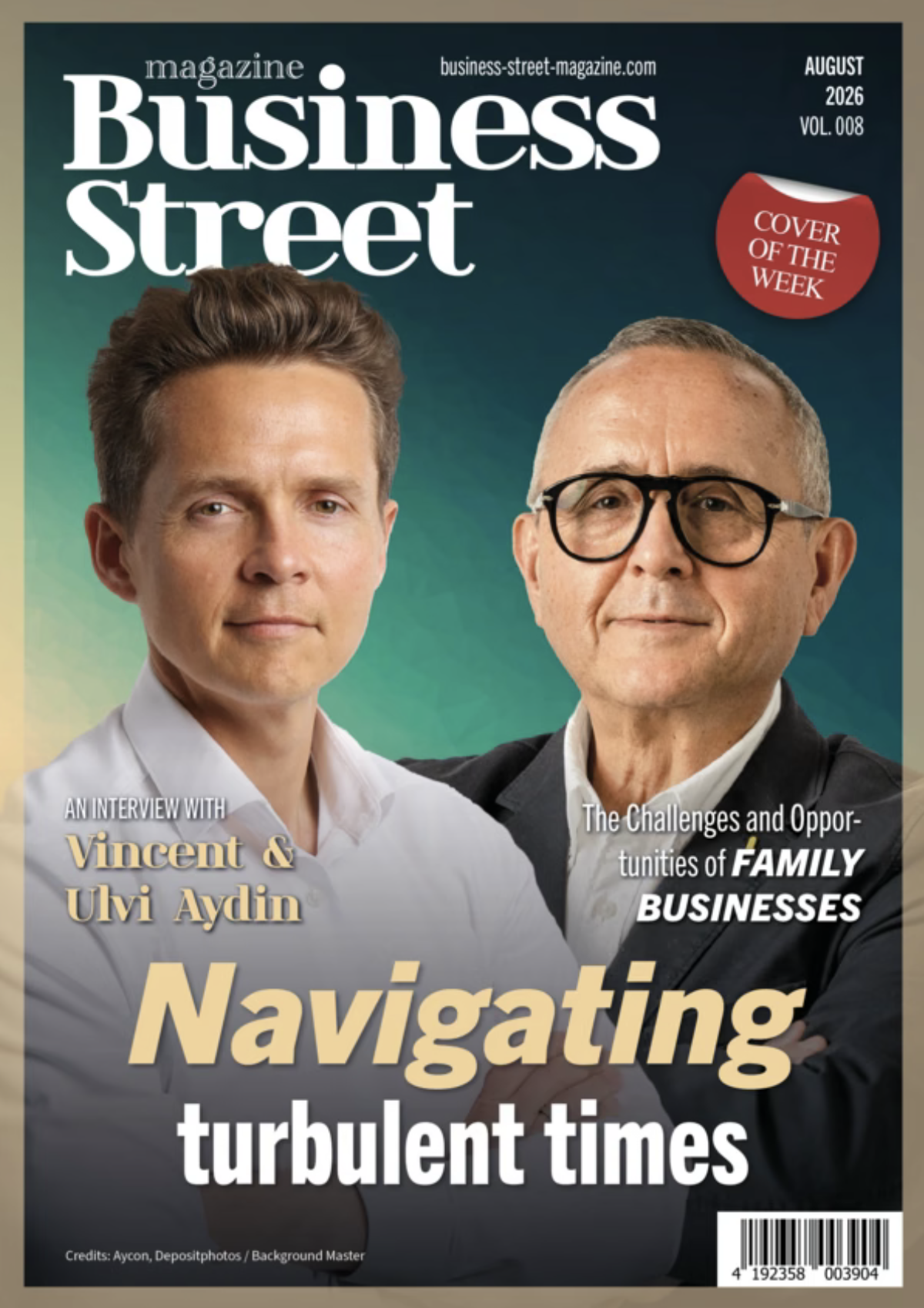
Navigating turbulent times
Ulvi and Vincent Aydin on the future of family businesses
As the global economy becomes increasingly volatile, family businesses are under more pressure than ever. They must unite generations, safeguard their core values, and at the same time have the courage to reinvent themselves. In this interview, Ulvi and Vincent Aydin share their perspectives on the challenges family businesses must overcome, the conflicts that can hold them back, and the opportunities created by technological innovation. Their message is clear: Businesses that embrace change today will be best positioned and succeed tomorrow.
Mr. Aydin, how did you get involved in advising family businesses, and what motivated you to become an entrepreneur and consultant?
Ulvi Aydin: An entrepreneur from the seventh generation of a family business had passed away, leaving behind a widow and a young child. In that situation, I stepped in and helped further develop the company in the best interests of the family. I genuinely enjoyed that experience. It is never easy for a family business to hold its own against large corporations. It is not only about developing the business further, but also about taking responsibility for future generations.
When you work as a consultant for a family business, you often take on the roles of advisor, coach, and mentor at the same time. I eventually became a consultant, but I have always had an entrepreneurial spirit. After completing my education, I spent around 20 years as an employee, but I always approached my work with an entrepreneurial mindset. That meant I approached every role as if I was running my own business.
What specific challenges, concerning leadership and succession, do you see within family businesses compared to other corporate structures?
Ulvi Aydin: Family businesses face very specific challenges, particularly when it comes to generational tensions and conflicts. In many cases, they need a family therapist more than a management consultant or interim manager.
Another challenge is that wealth can sometimes distort priorities. If the next generation receives one or two million euros a year, their sense of responsibility and entrepreneurial drive may not develop to the same extent. Only a small proportion of the younger generation is willing to put in the same level of effort and commitment as their parents did.Likewise, only a minority of people in leadership positions truly understand the broader entrepreneurial responsibility that comes with running a business.
Too often, the focus shifts to status symbols – such as the car you drive or whether your office is equipped with designer furniture.
Companies in which ownership and management are separated may appear less emotional, but they often have the advantage of making decisions based on facts rather than personal relationships. I also enjoy working with private equity firms because their decisions are usually guided by objective business considerations. In family businesses, emotions can sometimes overshadow sound decision-making. The key challenge is ensuring that the next generation develops the entrepreneurial mindset and holistic perspective needed to lead the company successfully into the future.
How has your own experience shaped your approach to advising different levels of management?
Ulvi Aydin: I expect a great deal from the people around me. I expect them to be straightforward, committed, and willing to push themselves. No one runs a marathon without training first. In the same way, you cannot achieve real success without stepping outside your comfort zone. That is one of the biggest challenges in our society today: we expect too little from ourselves and from those around us. At the same time, we expect society and the state to solve every problem for us. We see this particularly during times of disruption. In many companies, I see employees arriving two minutes late to a meeting, getting a coffee first, and only then being ready to start. That is simply wasted time. If I have a headache before an important meeting, I take an aspirin and move on.
:devider:
How do you deal with the emotional and interpersonal dynamics that often play a significant role in family businesses?
Ulvi Aydin: There are three essential principles. First, I never take sides. I act as an independent advisor whose responsibility is to the company, its owners, and all stakeholders. Second, I have to be absolutely clear. Third, real clarity is often uncomfortable – but discomfort is necessary for progress.
For example, if a company is sitting on excessive inventory, my advice is simple: Write it down because it has effectively lost its value. The owner's wife, who helped create the collection, often argues that they will eventually find another market for it. My response is always the same: there is no logical reason to believe anyone will want this product five years from now. Customers don't want it today, so it's time to move on.
You have guided companies through numerous periods of economic upheaval. What lies ahead, and how should businesses prepare?
Ulvi Aydin: The environment is becoming increasingly challenging – economically as well as structurally. The global economy is changing, and politics is only one factor. We are entering a period of profound uncertainty, and conditions are likely to become even more demanding.
At the same time, many organizations have become too comfortable with the status quo. For example, some companies employ one hundred people to perform work that could realistically be handled by eighty. Instead of driving digitalisation and optimising processes, they simply add more people.
Many businesses are heading for a harsh reality check, and some will not survive these turbulent times. If your entire focus is on preserving the status quo instead of preparing for the future, you won't have a Plan B when disruption arrives. Many companies talk about artificial intelligence, but very few are implementing it in a meaningful way.
Where do you see the biggest structural opportunities and risks for family businesses over the coming years, and how can they prepare?
Vincent Aydin: The greatest structural opportunity lies in the willingness to innovate. Companies that modernise their sales organisation and decision-making processes today will gain a competitive advantage tomorrow. Family businesses benefit from close collaboration and strong values – but they must carry these strengths into the future.
The greatest risk is the opposite: stagnation. Companies that cling to outdated structures – whether it is in sales, leadership, or in technology – will eventually be left behind by their competitors. Preparation means taking digital transformation seriously, adopting a market-driven sales strategy, and continuously developing leadership capabilities. New technologies represent one of the greatest opportunities available today.
In your view, where do German companies currently stand, and which potential do these technologies offer?
Vincent Aydin: Many German family businesses are still in the early stages of their digital transformation. CRM systems, artificial intelligence, and automation are often little more than buzzwords rather than an integral part of day-to-day business. There is tremendous potential in sales, particularly identify promising business opportunities at an early stage and predict customer needs more accurately.
That is why should not be viewed as merely an IT initiative.Instead of spending months developing strategies and concepts, companies should start with fast, targeted pilot projects to determine which use cases create measurable value in practice. Technology does not replace people – it helps them make better decisions, work more efficiently, and deliver greater value.


About Ulvi I. AYDIN
Ulvi I. AYDIN: Als international agierender Interim-CEO und -CSO unterstützt er mittelständische Unternehmen und Konzerne bei Marken- und Marktentwicklung, Neu-Positionierung, Organisations-Entwicklung, Restrukturierung und Vertriebsexzellenz.