Type image caption here (optional)NS-Raubkunst im Kunsthandel transparent machen!Heute spreche ich im Experten-Talk mit Simon Braun über den Kunsthandel, NS-Raubkunst und den spektakulären Restitutionsfall von Carl Spitzwegs Justitia, einem Werk aus der Spätromantik und Biedermeier-Zeit. Simon ist ein Young Professional im Bereich Kulturmanagement. 2019 und 2020 war er für die Agentur Goldmann Public Relations maßgeblich an der Kommunikationskampagne zur Restitution und Versteigerung der Justitia beteiligt – die nach langer Zeit endlich ihren rechtmäßigen Erben zurückgegeben werden konnte.Simon, als Laie erfährt man über den Kunsthandel eigentlich immer nur dann etwas, wenn mal wieder ein Kunstwerk für astronomische Summen versteigert wurde. Kannst Du uns einmal in Elevator-Pitch-Manier ein grobes Bild über den Wirtschaftssektor „Kunsthandel“ zeichnen?Man unterteilt den Kunsthandel grundsätzlich in zwei Bereiche: den Primärmarkt und den Sekundärmarkt. Der Primärmarkt setzt sich aus Sammlern und Galerien zusammen. Die Galerien vertreten die Künstler, die Künstler produzieren (wirtschaftlich ausgedrückt) die Ware. Die Sammler hängen sich die Kunstwerke an die Wand: Als Zukunftsinvestition, Ausdruck eines Lifestyles oder einfach, weil sie sich mit der Kunst identifizieren. Der Sekundärmarkt besteht aus den Kunsthändlern und Auktionshäusern. 2018 lag der Jahresumsatz für den weltweiten Sektor „Kunsthandel“ bei ca. 67 Mrd. Euro, in Deutschland bei etwa zwei Milliarden. Die USA, China und Großbritannien dominieren den Markt. Der Auktionsmarkt hatte 2018 alleinstehend einen Umsatz von 30 Mrd. Euro. Es gibt wenige große Player und ganz viele kleine – aber praktisch nichts dazwischen.Welche Auswirkung hatte der Corona-Lockdown auf die Auktionshäuser?Schon vor Corona gab es Online-Auktionen. Während des Lockdowns begannen viele Häuser, diese weiter auszubauen. Aber sowohl Anbieter also auch Bieter sind sich im großen Maße einig: Was eine Auktion ausmacht, sind die Geschehnisse im Auktionssaal. Bei uns war die Auktion von Carl Spitzwegs Justitia eine der ersten Auktionen nach dem Lockdown, die wieder physisch stattfanden. Das Haus hatte sich für eine hybride Lösung entschieden: Ein Teil der Bieter war vor Ort und ein anderer Teil konnte online mitbieten.Von den hohen Preisen im Kunsthandel werden doch bestimmt auch Fälscher angelockt, die versuchen ihre falschen echten Meister zu verkaufen, oder? Ich erinnere mich an Han van Meegeren, der in den 30er und 40er Jahren mehrere Vermeer-Fälschungen verkaufte – unter anderem an Herman Göring.Kunstfälschung hat sich in der Tat zu einer Art Berufsbild entwickelt - von Menschen, die auch im Fahrwasser des Marktes und des Geldes mitschwimmen wollen. Das geht von Signaturfälschung bis hin zu kompletter Neuschaffung von Gemälden, die dann als wiederentdeckte Objekte deklariert werden, wie bei Han van Meegeren oder, etwas aktueller, bei Wolfgang Beltracchi. Dennoch handelt es sich hierbei schon eher um organisiertes Verbrechen: Neben der Fälschung benötigt man meist einen Anwalt oder einen Gutachter sowie einen Galeristen, der das Werk vertritt – und diese Leute sollten in der Regel nach ihrem Gewissen handeln, was ja auch die meisten tun. Der Kunstmarkt ist hochprofessionell, man kennt diese Fälscher-Geschichten und jedes Museum und Auktionshaus hat seine eigenen Experten für Genre, Gattung, Künstler oder Techniken. Das sind detektivische Wissenschaftler, die Bilder röntgen und deren Pigmentierung analysieren. Man kann Fälschungen nicht komplett verhindern, aber es wird immer schwieriger für die Fälscher.Im Nationalsozialismus raubten die Nazis zahlreiche Kunstwerke. Die Opfer des Raubs waren vor allem verfolgte Juden. Der NS-Kunstraub wird auf 600.000 Kunstwerke geschätzt. Wie laufen die Prozesse der Rückgabe (Restitution) an die die rechtmäßigen Eigentümer ab?This photo provided by The Monuments Men Foundation for the Preservation of Art of Dallas, shows Monuments Man James Rorimer, with notepad, as he supervises American GI's hand-carrying paintings down the steps of the castle in Neuschwanstein, Germany in May of 1945. (photo credit: AP/National Archives and Records Administration)Bis heute gibt es noch ca. 100.000 Werke mit ungeklärter Provenienz (Herkunft). Es gibt Datenbanken und Institutionen, wie das Deutsche Zentrum Kulturgutverluste, die sich um solche Themen kümmern. Restitution ist aber eine rechtlich ziemlich schwierige Auseinandersetzung um Eigentum – und damit verwickelt sind menschliche Schicksale. Es gibt als Grundlage eine Selbstverpflichtung zur Aufarbeitung: 1998 wurden international die Washingtoner Prinzipien verabschiedet, in denen diese Selbstverpflichtung postuliert ist. Deutschland hat noch zusätzlich eine Handreichung mit Praxisempfehlungen verabschiedet, wie man mit Werken ungeklärter Herkunft umgehen sollte.Rechtlich ist das allerdings wenig bis gar nicht bindend. Es geht um den freien Willen der vermeintlichen Eigentümer. Wenn die rechtlichen Besitzansprüche geklärt sind, kann man die Herausgabe der Bilder verlangen. Allerdings verjähren die Ansprüche nach 30 Jahren. In der Praxis sind das Angelegenheiten, die extrem schwierig, langwierig und zäh sind und am Ende oft mit außergerichtlichen Einigungen geregelt werden.In Deutschland gibt es eine Arbeitsstelle für Provenienzforschung mit einem Jahresbudget von 2 Mio. Euro, die nur dafür da sind, solche Verhältnisse aufzuspüren. Mittlerweile gibt es auch Lehrstühle und private wie institutionelle Forscher, die sich damit beschäftigen – jedes größere Museum hat einen hauseigenen Provenienzforscher. In der Regel sind dies Kunsthistoriker und Rechtsanwälte. In unserem Fall hat sich ein Forscherteam durch Akten in halb Europa gewühlt, um herauszufinden, wie es um die Provenienz der Justitia steht.Erzähl uns die Story der Restitution der JustitiaCarl Spitzweg, „Justitia“, 1857 / Quelle: Neumeister/Christian MitkoGoldmann Public Relations ist eine führende PR-Agentur im Bereich Kunst und Kultur, mit Sitzen in Berlin, München und Zürich. Die Agentur bewegt sich im Handlungs- und Vermittlungsfeld zwischen Kultur, Wirtschaft und Medien. Während meiner Zeit kam das Münchner Auktionshaus „Neumeister“ auf uns zu. Nachdem die Eigentümerin das Haus von ihrem Vater übernommen hatte, ließ sie dessen gesamte Geschichte aufarbeiten. Fast jedes Auktionshaus, das während der NS-Zeit existierte oder existieren durfte, hat seine dunklen Seiten in der Geschichte. Auch das Auktionshaus Neumeister hat im Keller brisantes Material gefunden. Die Eigentümerin wollte so transparent wie möglich damit umgehen – und entschloss sich, die eigene Geschichte und die Provenienz bedeutsamer Werke von Forschern aufarbeiten zu lassen und damit an die Öffentlichkeit zu gehen. Damit ist das Auktionshaus Neumeister zum Pionier in Sachen Aufarbeitung von NS-Raubkunst geworden – denn viele Häuser ignorieren die ungeklärte Herkunft vieler ihrer Werke. Es war bis dato ein Tabuthema.Mit welchem Auftrag kam das Haus Neumeister auf euch zu?Das Auktionshaus Neumeister stand vor dem Fall Justitia. Sie wollten die Geschichte transparent machen, wussten aber nicht genau, wie. Also halfen wir ihnen, diese Geschichte zu erzählen und produktive Wege zu finden. Das Hauptziel war, die Geschichte der Besitzverhältnisse zu erzählen und klarzustellen, wer der ursprüngliche Eigentümer der Justitia war, bzw. wer die rechtmäßigen Erben sind.Was hat es mit dem Werk auf sich?Das Werk Justitia des Malers Carl Spitzweg ist ein Raubkunstfall, an dem exemplarisch die Dramatik, Tragweite und auch die Entwicklungsmöglichkeiten der Provenienzforschung deutlich werden. Denn wenn wir zurückschauen, handelt es sich um ein Gemälde, dessen ursprünglicher Besitzer – der jüdische Kunstsammler Leo Bendel – fliehen und im KZ sterben musste.Leo und Else Bendel kurz nach ihrer Ankunft in Wien. (Foto: Privatarchiv / Karl-Werner Quarg / Elisabeth Sandmann Verlag)Carl Spitzweg war Hitlers Lieblingsmaler. Das Bild, das Bendel unter Zwang der Nazis zu einem Spottpreis verkaufen musste, sollte in das geplante Führermuseum nach Linz gebracht werden. Der Verkaufspreis war niedrig, sodass Freiwilligkeit ausgeschlossen werden kann. Zwar hat Bendel theoretisch sein Eigentum an die Nazis übertragen. Aber unter diesem Kontext ist das natürlich mehr als zynisch. Heute spricht man von NS-verfolgungsbedingtem Verlust. Niemand hätte das Werk für diesen Preis verkauft. Die Ironie dabei ist, dass das Bild einen hochpolitischen Inhalt hat: Zu sehen ist eine Justitia mit verrutschter Augenbinde und kaputter Waage. Im Hintergrund lugt ein Wachmann um die Ecke. Die Aussage ist deutlich: Die Gerechtigkeit bröckelt.Als die Alliierten endlich die Oberhand im Krieg gewannen, wurde das Werk von den Nazis mit anderen Gemälden in einem Bergwerk versteckt, um es vor Bombeneinschlägen zu schützen. Später wurde es dann von alliierten Monuments Men gefunden und zum Central Collecting Point der Alliierten nach München gebracht. Dort konnte man aufgrund eines Schreibfehlers den Besitzer nicht mehr feststellen. So kam das Bild dann erst zum bayrischen Ministerpräsidenten und dann später, 1961, in die Villa Hammerschmidt des Bundespräsidialamtes, wo es bis 2006 die Amtsräume von acht Bundespräsidenten schmückte – von Heinrich Lübke bist Horst Köhler.Wahnsinn!Auch das ist eine Pointe, dass das Werk so lange im Bundespräsidialamt hing! 2006/2007 wurde dann ein Antrag zur Restitution gestellt, dem Horst Köhler auch stattgegeben hat. Aber dann ging es noch einmal richtig los.Wie meinst Du das? Es dauerte noch einmal zwölf Jahre, bis das Bild dann 2019 an die rechtmäßigen Erben ging. Köhler hatte den Antrag zwar unterzeichnet. Allerdings zeigte der deutsche Beamtenapparat dann sein hässliches Gesicht und stellte immer neue juristische und bürokratische Hürden. Die Nichte der Frau des Besitzers Leo Bendel war rechtmäßige Erbin. Sie ist während des Restitutionsprozesses allerdings verstorben. So musste ein neuer Erbantrag gestellt werden. Und vonseiten der Bürokratie kamen Forderungen nach der Geburtsurkunde von Leo Bendel. Seine Geburtsstadt in Polen wurde von den Nazis dem Erdboden gleich gemacht. Wie soll man da eine Geburtsurkunde einholen?Der Besitzerin des Auktionshauses Neumeister und Goldmann PR war es wichtig, dafür zu kämpfen, solche Hürden abzubauen und gemeinsam mit der Politik solche Restitutionsprozesse produktiver zu gestalten. Darum haben wir auch eine Tagung mit unterschiedlichen Akteuren und Interessensgruppen dazu veranstaltet, um eine zielführende Diskussion zu ermöglichen.Vielen Dank, Simon!Bringing Light to Nazi-looted Art within the Art Sector / Art TradeIn today’s expert-talk, I am speaking with Simon Braun about the art sector, Nazi-looted art and the spectacular restitution case of Carl Spitzweg’s Justitia (Lady Justice), a painting from the Late-Romantic and Biedermeier era. Simon is a young professionalworking in cultural management. In 2019 and 2020, he played a decisive role in the communication campaign for the restitution and auction of Justitia, which after a long time was returned to its rightful heirs at last.Simon, as a lay person you only ever hear about the art sector when an artwork is auctioned for a staggering amount of money. Can you give as us an elevator pitch on what the art trade looks like as an economic sector? You can generally divide the art sector into two areas: the primary market and the secondary market. The primary market consists of collectors and galleries. Galleries represent artists and artists produce the goods, economically speaking. Collectors put the works on their walls: as future investment, expression of a lifestyle or simply because they identify with the artwork. The secondary market is made up of art dealers and auction houses. In 2018, the total revenue in the art sector amounted to 67 billion euros worldwide and around two billion euros in Germany. The market is dominated by the USA, China and the UK. The auction market alone had a revenue of 30 billion euros in 2018. There are very few big players and many small ones – but hardly anything in between.How did the Covid-19 lockdown impact auction houses?There already had been online auctions before Covid-19. During the lockdown, many houses began to expand them. Still, both sellers and buyers are largely unanimous: What makes the appeal of an auction is the live-action in the room. Our auction of Carl Spitzweg’s Justitia was one of the first auctions in front of an audience after the shutdown. The house went for a hybrid-solution: a part of the bidders was physically present, the other part could bid online.Surely, high prices in the art trade must attract many forgers who try to sell their fake masterpieces? I remember Han van Meegeren, who sold multiple fake Vermeer-paintings during the 1930s and 1940s – to the leading Nazi politician Herman Göring, among others.Art forgery has indeed become a kind of profession – for people who want to benefit from the market and the money in it. This ranges from faking signatures to creating completely new paintings which are then declared as rediscovered works, as in the case of Han van Meegeren or, more recently, Wolfgang Beltracchi. Of course, this rather falls in the category of organized crime: apart from the fake painting, you would need an attorney or third-party assessor as well as a gallerist who represents the work – and these experts are held to act to the best of their knowledge and belief, which most of them do. The art market today is highly professional. These stories of forgery are known and so every museum and auction house has its own experts for different genres, eras, artists or techniques. They are detective-like scientists who X-ray canvases and analyse their colour pigmentation. Fakes cannot be stopped completely, but it is getting harder and harder for forgers.During National Socialism, the Nazis looted many works of art. Above all, the victims were persecuted Jews. Estimates range at around 600.000 stolen works. What does the process of returning the works to their rightful owners (restitution) look like?This photo provided by The Monuments Men Foundation for the Preservation of Art of Dallas, shows Monuments Man James Rorimer, with notepad, as he supervises American GI's hand-carrying paintings down the steps of the castle in Neuschwanstein, Germany in May of 1945. (photo credit: AP/National Archives and Records Administration)Today, we still count around 100.000 works with ambiguous provenance. There are databanks and institutions such as the German Lost Art Foundation who deal with these issues. However, restitution proves to be a rather difficult legal contention around the issue of property – deeply intertwining with human fates. As a basis, the Washington Principles, an international self-commitment to come to terms with and solve these cases, have been enacted. Additionally, Germany has published a recommendation providing practical steps on how to handle works with unclear provenance.Legally however, they are hardly binding at all. Above all else, it comes down to the current owner’s free will. After clarifying the ownership claims, the return of a painting can be demanded. However, original entitlement to possession expires after 30 years. In reality, these cases turn out to be extremely difficult and lengthy, which is why in the end they are often resolved in settlements out of court.The German government has an office for provenance research with a yearly budget of 2 million euros, which solely traces out such cases. By now, there are also dedicated university departments and both private and institutional investigators. Every larger museum has its own provenance researcher. Usually, those are art historians or lawyers. In our case, a team of researchers dug through files and records in half of Europe in order to discover the exact provenance of Justitia.Tell us the restitution story of JustitiaCarl Spitzweg, „Justitia“, 1857 / Quelle: Neumeister/Christian MitkoGoldmann Public Relations is a leading PR-agency in the Arts & Culture sector with offices in Berlin, Munich and Zurich. The firm acts as a mediator and communicator between the sectors of art, business and the media. During my employment, Neumeister Auctioneers, Munich approached us. After succeeding her father in managing the house, the owner had its entire history researched and made transparent. Nearly every auction house that existed or was allowed to exist during National Socialism, has some dark sides to its history. Likewise, Neumeister discovered highly sensitive material in its basement. Wishing to treat the material as transparently as possible, the owner decided to let scientists research the house’s history as well as the provenance of significant works and to make them public. This way, the auction house became a pioneer in dealing with Nazi-looted art, since many other houses often ignore unexplained parts in the provenance of its artworks. Until then, the issue had been more or less taboo.What mission did the auction house entrust to you?Neumeister was confronted with the case of Justitia. They wanted to make its history publicly transparent, but did not know how. So we helped them tell the story and find productive ways of dealing with the issues surrounding it. The main goal was to narrate the history of its ownership and clarify who rightfully owns it.What is the story behind the artwork? Carl Spitzweg’s painting Justitia is a case of Nazi-looted art that exemplifies the drama as well as the scale and consequences, but also the potential for development that lie in the field of provenance research. Looking closer, we discover a painting whose original owner – the Jewish art collector Leo Bendel – was forced to flee and who eventually died in a concentration camp.Leo und Else Bendel kurz nach ihrer Ankunft in Wien. (Foto: Privatarchiv / Karl-Werner Quarg / Elisabeth Sandmann Verlag)Carl Spitzweg was Hitler’s favourite painter. The work, that Bendel sold under duress of the Nazis at a ridiculous price, was intended to feature in Hitler’s planned ‘Führermuseum’ in Linz, Austria. The price was low, therefore the possibility of a voluntary sale can be excluded. On a theorical level, Bendel did transfer his property to the Nazis. In this context, such an assumption would of course be cynical. Today, we describe this as a loss resulting from persecution. No one would have given away the work unless pressurized by such circumstances. The irony is that the painting has a highly political subject matter: it depicts a statue of Lady Justice whose blindfold has slipped and whose scales are broken. In the background, a police officer suspiciously lurks at the viewer. The message is clear: justice is disintegrating.When the Allied forces gained the upper hand in the war, this work and other paintings were hid away by the Nazis in an abandoned mine to protect them from the bombs. Later, allied Monuments Men discovered it and brought it to the american Central Collecting Point in Munich. Due to an error in spelling, the owner could not be determined. Subsequently, the painting was handed to the Bavarian Prime Minister and then later, in 1961, to the Villa Hammerschmidt – the Office of the German Federal President – where it decorated the offices of eight Federal Presidents: from Heinrich Lübke to Horst Köhler.Unbelievable! Quite ironic indeed, that the work hung on the walls of the German Federal President for such a long time. In 2006/2007, the rightful heirs filed a claim for restitution, which was granted by Horst Köhler. But then, things really took off once more.How do you mean?It would take another twelve years until the painting was returned to the rightful heirs in 2019. Köhler did grant the restitution, but then German bureaucracy revealed its true face and posed ever new legal and administrative obstacles. The niece of Leo Bendel’s wife was the rightful heir. However, she passed away during the restitution process. A new application for inheritance had to be filed. The bureaucracy insistently demanded a birth certificate of Leo Bendel, whose native town in Poland had been eradicated to the ground by the Nazis. How should you come up with a birth certificate there?It was a concern of the auction house Neumeister and of Goldmann Public Relations to fight for the removal of such barriers and, in collaboration with political actors, to increase the productivity of restitution processes. This is why we also hosted a conference with various actors and stakeholders on the matter, in order to enable a goal-oriented discussion.Thank you very much, Simon!
*
Minuten
NS-Raubkunst im Kunsthandel transparent machen!
Heute spreche ich im Experten-Talk mit Simon Braun über den Kunsthandel, NS-Raubkunst und den spektakulären Restitutionsfall von Carl Spitzwegs Justitia, einem Werk aus der Spätromantik und Biedermeier-Zeit. Simon ist ein Young Professional im Bereich Kulturmanagement. 2019 und 2020 war er für die Agentur Goldmann Public Relations maßgeblich an der Kommunikationskampagne zur Restitution und Versteigerung der Justitia beteiligt – die nach langer Zeit endlich ihren rechtmäßigen Erben zurückgegeben werden konnte.
Simon, als Laie erfährt man über den Kunsthandel eigentlich immer nur dann etwas, wenn mal wieder ein Kunstwerk für astronomische Summen versteigert wurde. Kannst Du uns einmal in Elevator-Pitch-Manier ein grobes Bild über den Wirtschaftssektor „Kunsthandel“ zeichnen?
Man unterteilt den Kunsthandel grundsätzlich in zwei Bereiche: den Primärmarkt und den Sekundärmarkt. Der Primärmarkt setzt sich aus Sammlern und Galerien zusammen. Die Galerien vertreten die Künstler, die Künstler produzieren (wirtschaftlich ausgedrückt) die Ware. Die Sammler hängen sich die Kunstwerke an die Wand: Als Zukunftsinvestition, Ausdruck eines Lifestyles oder einfach, weil sie sich mit der Kunst identifizieren. Der Sekundärmarkt besteht aus den Kunsthändlern und Auktionshäusern. 2018 lag der Jahresumsatz für den weltweiten Sektor „Kunsthandel“ bei ca. 67 Mrd. Euro, in Deutschland bei etwa zwei Milliarden. Die USA, China und Großbritannien dominieren den Markt. Der Auktionsmarkt hatte 2018 alleinstehend einen Umsatz von 30 Mrd. Euro. Es gibt wenige große Player und ganz viele kleine – aber praktisch nichts dazwischen.
:devider:
Welche Auswirkung hatte der Corona-Lockdown auf die Auktionshäuser?
Schon vor Corona gab es Online-Auktionen. Während des Lockdowns begannen viele Häuser, diese weiter auszubauen. Aber sowohl Anbieter also auch Bieter sind sich im großen Maße einig: Was eine Auktion ausmacht, sind die Geschehnisse im Auktionssaal. Bei uns war die Auktion von Carl Spitzwegs Justitia eine der ersten Auktionen nach dem Lockdown, die wieder physisch stattfanden. Das Haus hatte sich für eine hybride Lösung entschieden: Ein Teil der Bieter war vor Ort und ein anderer Teil konnte online mitbieten.
:devider:
Von den hohen Preisen im Kunsthandel werden doch bestimmt auch Fälscher angelockt, die versuchen ihre falschen echten Meister zu verkaufen, oder? Ich erinnere mich an Han van Meegeren, der in den 30er und 40er Jahren mehrere Vermeer-Fälschungen verkaufte – unter anderem an Herman Göring.
Kunstfälschung hat sich in der Tat zu einer Art Berufsbild entwickelt - von Menschen, die auch im Fahrwasser des Marktes und des Geldes mitschwimmen wollen. Das geht von Signaturfälschung bis hin zu kompletter Neuschaffung von Gemälden, die dann als wiederentdeckte Objekte deklariert werden, wie bei Han van Meegeren oder, etwas aktueller, bei Wolfgang Beltracchi. Dennoch handelt es sich hierbei schon eher um organisiertes Verbrechen: Neben der Fälschung benötigt man meist einen Anwalt oder einen Gutachter sowie einen Galeristen, der das Werk vertritt – und diese Leute sollten in der Regel nach ihrem Gewissen handeln, was ja auch die meisten tun. Der Kunstmarkt ist hochprofessionell, man kennt diese Fälscher-Geschichten und jedes Museum und Auktionshaus hat seine eigenen Experten für Genre, Gattung, Künstler oder Techniken. Das sind detektivische Wissenschaftler, die Bilder röntgen und deren Pigmentierung analysieren. Man kann Fälschungen nicht komplett verhindern, aber es wird immer schwieriger für die Fälscher.
:devider:
Im Nationalsozialismus raubten die Nazis zahlreiche Kunstwerke. Die Opfer des Raubs waren vor allem verfolgte Juden. Der NS-Kunstraub wird auf 600.000 Kunstwerke geschätzt. Wie laufen die Prozesse der Rückgabe (Restitution) an die die rechtmäßigen Eigentümer ab?
photo credit: AP/National Archives and Records Administration)
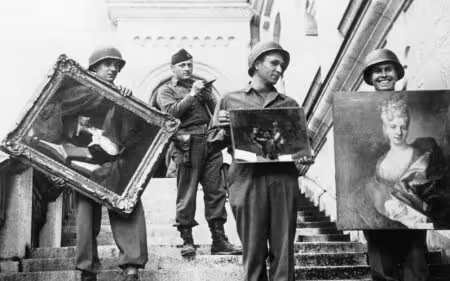
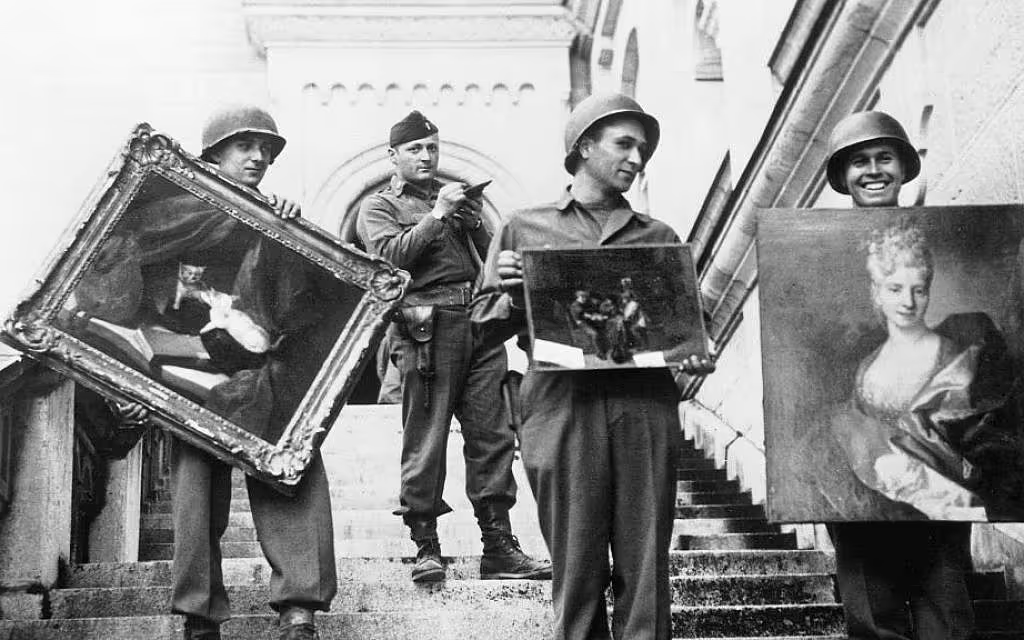
This photo provided by The Monuments Men Foundation for the Preservation of Art of Dallas, shows Monuments Man James Rorimer, with notepad, as he supervises American GI's hand-carrying paintings down the steps of the castle in Neuschwanstein, Germany in May of 1945.
Bis heute gibt es noch ca. 100.000 Werke mit ungeklärter Provenienz (Herkunft). Es gibt Datenbanken und Institutionen, wie das Deutsche Zentrum Kulturgutverluste, die sich um solche Themen kümmern. Restitution ist aber eine rechtlich ziemlich schwierige Auseinandersetzung um Eigentum – und damit verwickelt sind menschliche Schicksale. Es gibt als Grundlage eine Selbstverpflichtung zur Aufarbeitung: 1998 wurden international die Washingtoner Prinzipien verabschiedet, in denen diese Selbstverpflichtung postuliert ist. Deutschland hat noch zusätzlich eine Handreichung mit Praxisempfehlungen verabschiedet, wie man mit Werken ungeklärter Herkunft umgehen sollte.Rechtlich ist das allerdings wenig bis gar nicht bindend. Es geht um den freien Willen der vermeintlichen Eigentümer. Wenn die rechtlichen Besitzansprüche geklärt sind, kann man die Herausgabe der Bilder verlangen. Allerdings verjähren die Ansprüche nach 30 Jahren. In der Praxis sind das Angelegenheiten, die extrem schwierig, langwierig und zäh sind und am Ende oft mit außergerichtlichen Einigungen geregelt werden.In Deutschland gibt es eine Arbeitsstelle für Provenienzforschung mit einem Jahresbudget von 2 Mio. Euro, die nur dafür da sind, solche Verhältnisse aufzuspüren. Mittlerweile gibt es auch Lehrstühle und private wie institutionelle Forscher, die sich damit beschäftigen – jedes größere Museum hat einen hauseigenen Provenienzforscher. In der Regel sind dies Kunsthistoriker und Rechtsanwälte. In unserem Fall hat sich ein Forscherteam durch Akten in halb Europa gewühlt, um herauszufinden, wie es um die Provenienz der Justitia steht.
:devider:
Erzähl uns die Story der Restitution der Justitia
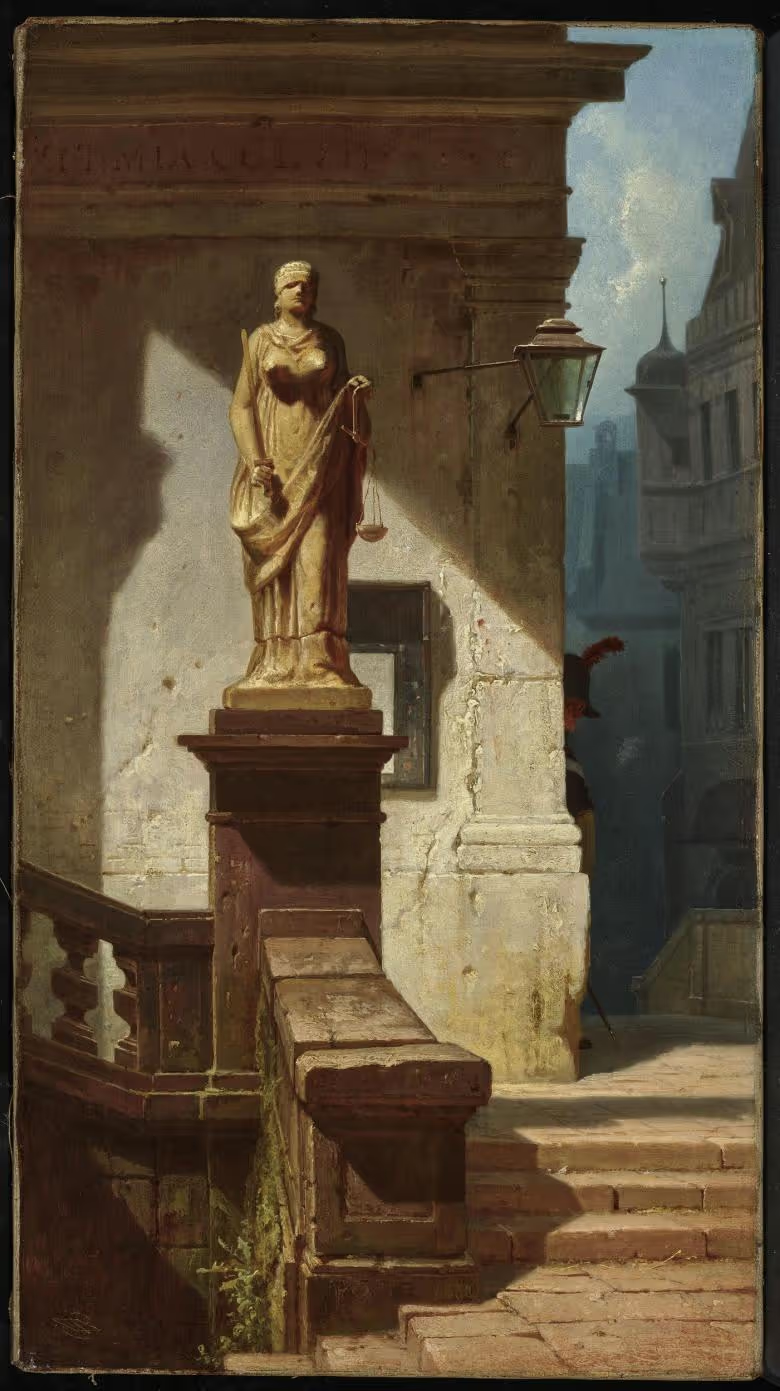
Carl Spitzweg, „Justitia“, 1857 / Quelle: Neumeister/Christian Mitko
Goldmann Public Relations ist eine führende PR-Agentur im Bereich Kunst und Kultur, mit Sitzen in Berlin, München und Zürich. Die Agentur bewegt sich im Handlungs- und Vermittlungsfeld zwischen Kultur, Wirtschaft und Medien. Während meiner Zeit kam das Münchner Auktionshaus „Neumeister“ auf uns zu. Nachdem die Eigentümerin das Haus von ihrem Vater übernommen hatte, ließ sie dessen gesamte Geschichte aufarbeiten. Fast jedes Auktionshaus, das während der NS-Zeit existierte oder existieren durfte, hat seine dunklen Seiten in der Geschichte. Auch das Auktionshaus Neumeister hat im Keller brisantes Material gefunden. Die Eigentümerin wollte so transparent wie möglich damit umgehen – und entschloss sich, die eigene Geschichte und die Provenienz bedeutsamer Werke von Forschern aufarbeiten zu lassen und damit an die Öffentlichkeit zu gehen. Damit ist das Auktionshaus Neumeister zum Pionier in Sachen Aufarbeitung von NS-Raubkunst geworden – denn viele Häuser ignorieren die ungeklärte Herkunft vieler ihrer Werke. Es war bis dato ein Tabuthema.
:devider:
Mit welchem Auftrag kam das Haus Neumeister auf euch zu?
Das Auktionshaus Neumeister stand vor dem Fall Justitia. Sie wollten die Geschichte transparent machen, wussten aber nicht genau, wie. Also halfen wir ihnen, diese Geschichte zu erzählen und produktive Wege zu finden. Das Hauptziel war, die Geschichte der Besitzverhältnisse zu erzählen und klarzustellen, wer der ursprüngliche Eigentümer der Justitia war, bzw. wer die rechtmäßigen Erben sind.
:devider:
Was hat es mit dem Werk auf sich?
Das Werk Justitia des Malers Carl Spitzweg ist ein Raubkunstfall, an dem exemplarisch die Dramatik, Tragweite und auch die Entwicklungsmöglichkeiten der Provenienzforschung deutlich werden. Denn wenn wir zurückschauen, handelt es sich um ein Gemälde, dessen ursprünglicher Besitzer – der jüdische Kunstsammler Leo Bendel – fliehen und im KZ sterben musste.
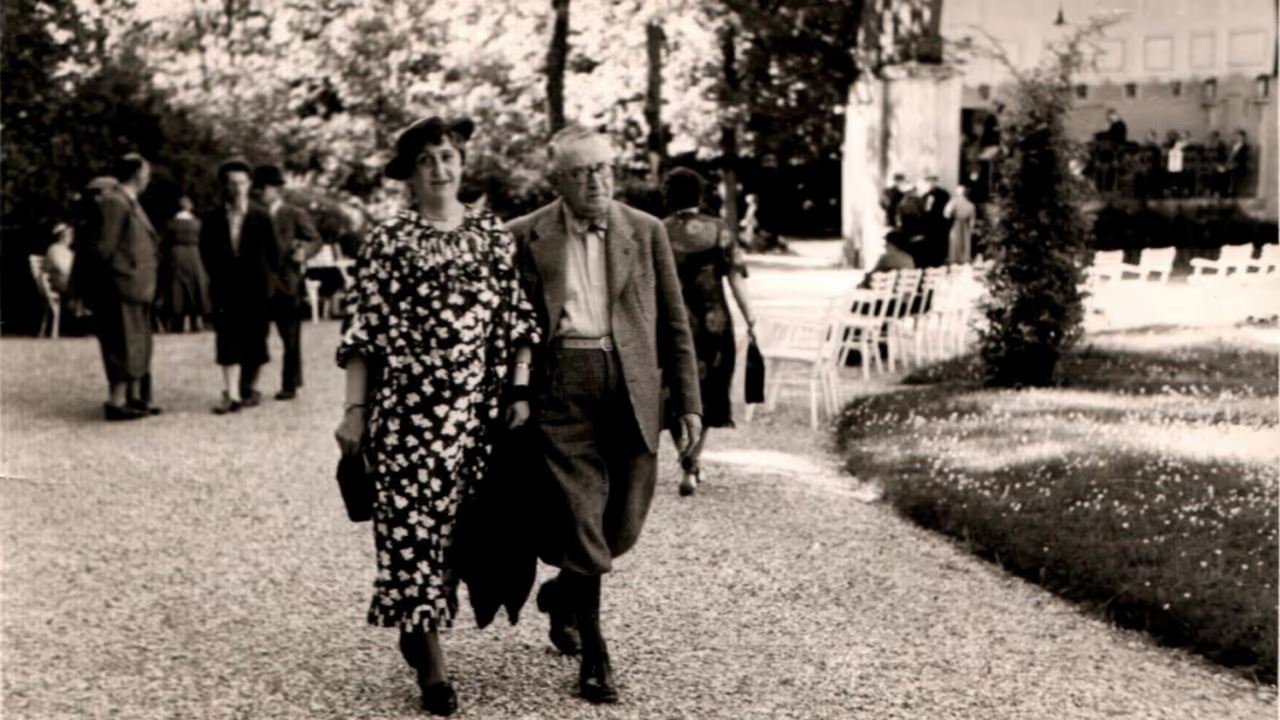
Leo und Else Bendel kurz nach ihrer Ankunft in Wien. (Foto: Privatarchiv / Karl-Werner Quarg / Elisabeth Sandmann Verlag)
Carl Spitzweg war Hitlers Lieblingsmaler. Das Bild, das Bendel unter Zwang der Nazis zu einem Spottpreis verkaufen musste, sollte in das geplante Führermuseum nach Linz gebracht werden. Der Verkaufspreis war niedrig, sodass Freiwilligkeit ausgeschlossen werden kann. Zwar hat Bendel theoretisch sein Eigentum an die Nazis übertragen. Aber unter diesem Kontext ist das natürlich mehr als zynisch. Heute spricht man von NS-verfolgungsbedingtem Verlust. Niemand hätte das Werk für diesen Preis verkauft. Die Ironie dabei ist, dass das Bild einen hochpolitischen Inhalt hat: Zu sehen ist eine Justitia mit verrutschter Augenbinde und kaputter Waage. Im Hintergrund lugt ein Wachmann um die Ecke. Die Aussage ist deutlich: Die Gerechtigkeit bröckelt.Als die Alliierten endlich die Oberhand im Krieg gewannen, wurde das Werk von den Nazis mit anderen Gemälden in einem Bergwerk versteckt, um es vor Bombeneinschlägen zu schützen. Später wurde es dann von alliierten Monuments Men gefunden und zum Central Collecting Point der Alliierten nach München gebracht. Dort konnte man aufgrund eines Schreibfehlers den Besitzer nicht mehr feststellen. So kam das Bild dann erst zum bayrischen Ministerpräsidenten und dann später, 1961, in die Villa Hammerschmidt des Bundespräsidialamtes, wo es bis 2006 die Amtsräume von acht Bundespräsidenten schmückte – von Heinrich Lübke bist Horst Köhler.
:devider:
Wahnsinn!
Auch das ist eine Pointe, dass das Werk so lange im Bundespräsidialamt hing! 2006/2007 wurde dann ein Antrag zur Restitution gestellt, dem Horst Köhler auch stattgegeben hat. Aber dann ging es noch einmal richtig los.
:devider:
Wie meinst Du das?
Es dauerte noch einmal zwölf Jahre, bis das Bild dann 2019 an die rechtmäßigen Erben ging. Köhler hatte den Antrag zwar unterzeichnet. Allerdings zeigte der deutsche Beamtenapparat dann sein hässliches Gesicht und stellte immer neue juristische und bürokratische Hürden. Die Nichte der Frau des Besitzers Leo Bendel war rechtmäßige Erbin. Sie ist während des Restitutionsprozesses allerdings verstorben. So musste ein neuer Erbantrag gestellt werden. Und vonseiten der Bürokratie kamen Forderungen nach der Geburtsurkunde von Leo Bendel. Seine Geburtsstadt in Polen wurde von den Nazis dem Erdboden gleich gemacht. Wie soll man da eine Geburtsurkunde einholen?Der Besitzerin des Auktionshauses Neumeister und Goldmann PR war es wichtig, dafür zu kämpfen, solche Hürden abzubauen und gemeinsam mit der Politik solche Restitutionsprozesse produktiver zu gestalten. Darum haben wir auch eine Tagung mit unterschiedlichen Akteuren und Interessensgruppen dazu veranstaltet, um eine zielführende Diskussion zu ermöglichen.
:devider:
Vielen Dank, Simon!
Bringing Light to Nazi-looted Art within the Art Sector / Art Trade
In today’s expert-talk, I am speaking with Simon Braun about the art sector, Nazi-looted art and the spectacular restitution case of Carl Spitzweg’s Justitia (Lady Justice), a painting from the Late-Romantic and Biedermeier era. Simon is a young professionalworking in cultural management. In 2019 and 2020, he played a decisive role in the communication campaign for the restitution and auction of Justitia, which after a long time was returned to its rightful heirs at last.
Simon, as a lay person you only ever hear about the art sector when an artwork is auctioned for a staggering amount of money. Can you give as us an elevator pitch on what the art trade looks like as an economic sector?
You can generally divide the art sector into two areas: the primary market and the secondary market. The primary market consists of collectors and galleries. Galleries represent artists and artists produce the goods, economically speaking. Collectors put the works on their walls: as future investment, expression of a lifestyle or simply because they identify with the artwork. The secondary market is made up of art dealers and auction houses. In 2018, the total revenue in the art sector amounted to 67 billion euros worldwide and around two billion euros in Germany. The market is dominated by the USA, China and the UK. The auction market alone had a revenue of 30 billion euros in 2018. There are very few big players and many small ones – but hardly anything in between.
:devider:
How did the Covid-19 lockdown impact auction houses?
There already had been online auctions before Covid-19. During the lockdown, many houses began to expand them. Still, both sellers and buyers are largely unanimous: What makes the appeal of an auction is the live-action in the room. Our auction of Carl Spitzweg’s Justitia was one of the first auctions in front of an audience after the shutdown. The house went for a hybrid-solution: a part of the bidders was physically present, the other part could bid online.
:devider:
Surely, high prices in the art trade must attract many forgers who try to sell their fake masterpieces? I remember Han van Meegeren, who sold multiple fake Vermeer-paintings during the 1930s and 1940s – to the leading Nazi politician Herman Göring, among others.
Art forgery has indeed become a kind of profession – for people who want to benefit from the market and the money in it. This ranges from faking signatures to creating completely new paintings which are then declared as rediscovered works, as in the case of Han van Meegeren or, more recently, Wolfgang Beltracchi. Of course, this rather falls in the category of organized crime: apart from the fake painting, you would need an attorney or third-party assessor as well as a gallerist who represents the work – and these experts are held to act to the best of their knowledge and belief, which most of them do. The art market today is highly professional. These stories of forgery are known and so every museum and auction house has its own experts for different genres, eras, artists or techniques. They are detective-like scientists who X-ray canvases and analyse their colour pigmentation. Fakes cannot be stopped completely, but it is getting harder and harder for forgers.
:devider:
During National Socialism, the Nazis looted many works of art. Above all, the victims were persecuted Jews. Estimates range at around 600.000 stolen works. What does the process of returning the works to their rightful owners (restitution) look like?
photo credit: AP/National Archives and Records Administration
This photo provided by The Monuments Men Foundation for the Preservation of Art of Dallas, shows Monuments Man James Rorimer, with notepad, as he supervises American GI's hand-carrying paintings down the steps of the castle in Neuschwanstein, Germany in May of 1945.
Today, we still count around 100.000 works with ambiguous provenance. There are databanks and institutions such as the German Lost Art Foundation who deal with these issues. However, restitution proves to be a rather difficult legal contention around the issue of property – deeply intertwining with human fates. As a basis, the Washington Principles, an international self-commitment to come to terms with and solve these cases, have been enacted. Additionally, Germany has published a recommendation providing practical steps on how to handle works with unclear provenance.Legally however, they are hardly binding at all. Above all else, it comes down to the current owner’s free will. After clarifying the ownership claims, the return of a painting can be demanded. However, original entitlement to possession expires after 30 years. In reality, these cases turn out to be extremely difficult and lengthy, which is why in the end they are often resolved in settlements out of court.The German government has an office for provenance research with a yearly budget of 2 million euros, which solely traces out such cases. By now, there are also dedicated university departments and both private and institutional investigators. Every larger museum has its own provenance researcher. Usually, those are art historians or lawyers. In our case, a team of researchers dug through files and records in half of Europe in order to discover the exact provenance of Justitia.
:devider:
Tell us the restitution story of Justitia
Carl Spitzweg, „Justitia“, 1857 / Quelle: Neumeister/Christian Mitko
Goldmann Public Relations is a leading PR-agency in the Arts & Culture sector with offices in Berlin, Munich and Zurich. The firm acts as a mediator and communicator between the sectors of art, business and the media. During my employment, Neumeister Auctioneers, Munich approached us. After succeeding her father in managing the house, the owner had its entire history researched and made transparent. Nearly every auction house that existed or was allowed to exist during National Socialism, has some dark sides to its history. Likewise, Neumeister discovered highly sensitive material in its basement. Wishing to treat the material as transparently as possible, the owner decided to let scientists research the house’s history as well as the provenance of significant works and to make them public. This way, the auction house became a pioneer in dealing with Nazi-looted art, since many other houses often ignore unexplained parts in the provenance of its artworks. Until then, the issue had been more or less taboo.
:devider:
What mission did the auction house entrust to you?
Neumeister was confronted with the case of Justitia. They wanted to make its history publicly transparent, but did not know how. So we helped them tell the story and find productive ways of dealing with the issues surrounding it. The main goal was to narrate the history of its ownership and clarify who rightfully owns it.
:devider:
What is the story behind the artwork?
Carl Spitzweg’s painting Justitia is a case of Nazi-looted art that exemplifies the drama as well as the scale and consequences, but also the potential for development that lie in the field of provenance research. Looking closer, we discover a painting whose original owner – the Jewish art collector Leo Bendel – was forced to flee and who eventually died in a concentration camp.
Leo und Else Bendel kurz nach ihrer Ankunft in Wien. (Foto: Privatarchiv / Karl-Werner Quarg / Elisabeth Sandmann Verlag)
Carl Spitzweg was Hitler’s favourite painter. The work, that Bendel sold under duress of the Nazis at a ridiculous price, was intended to feature in Hitler’s planned ‘Führermuseum’ in Linz, Austria. The price was low, therefore the possibility of a voluntary sale can be excluded. On a theorical level, Bendel did transfer his property to the Nazis. In this context, such an assumption would of course be cynical. Today, we describe this as a loss resulting from persecution. No one would have given away the work unless pressurized by such circumstances. The irony is that the painting has a highly political subject matter: it depicts a statue of Lady Justice whose blindfold has slipped and whose scales are broken. In the background, a police officer suspiciously lurks at the viewer. The message is clear: justice is disintegrating.When the Allied forces gained the upper hand in the war, this work and other paintings were hid away by the Nazis in an abandoned mine to protect them from the bombs. Later, allied Monuments Men discovered it and brought it to the american Central Collecting Point in Munich. Due to an error in spelling, the owner could not be determined. Subsequently, the painting was handed to the Bavarian Prime Minister and then later, in 1961, to the Villa Hammerschmidt – the Office of the German Federal President – where it decorated the offices of eight Federal Presidents: from Heinrich Lübke to Horst Köhler.
:devider:
Unbelievable!
Quite ironic indeed, that the work hung on the walls of the German Federal President for such a long time. In 2006/2007, the rightful heirs filed a claim for restitution, which was granted by Horst Köhler. But then, things really took off once more.
:devider:
How do you mean?
It would take another twelve years until the painting was returned to the rightful heirs in 2019. Köhler did grant the restitution, but then German bureaucracy revealed its true face and posed ever new legal and administrative obstacles. The niece of Leo Bendel’s wife was the rightful heir. However, she passed away during the restitution process. A new application for inheritance had to be filed. The bureaucracy insistently demanded a birth certificate of Leo Bendel, whose native town in Poland had been eradicated to the ground by the Nazis. How should you come up with a birth certificate there?It was a concern of the auction house Neumeister and of Goldmann Public Relations to fight for the removal of such barriers and, in collaboration with political actors, to increase the productivity of restitution processes. This is why we also hosted a conference with various actors and stakeholders on the matter, in order to enable a goal-oriented discussion.
:devider:
Thank you very much, Simon!
No items found.
!AYCON Blog
October
4
,
2026
2026
9 unbequeme Fragen. Und keine Ausreden.
Eine Psychiaterin stellte einmal neun Fragen, die auf den ersten Blick einfach wirken. Aber wenn man versucht, sie wirklich ehrlich zu beantworten, werden sie plötzlich unbequem:
1. Wenn du nur noch einen Tag zu leben hättest – wem würdest du es sagen?
2. Wenn du alles zurückbekommen könntest, was du jemals verloren hast – wonach würdest du zuerst suchen?
3. Wie alt wärst du, wenn du nicht wüsstest, wie alt du bist?
4. Wenn du jetzt überall auf der Welt sein könntest – würdest du zu einem Ort reisen oder zu einem Menschen?
5. Würdest du deine schlimmste Erinnerung löschen oder deine schönste noch einmal erleben?
6. Welches „Was wäre, wenn …?“ beschäftigt dich bis heute?
7. Wenn du für immer leben könntest – würdest du es wollen?
8. Wenn alle Menschen, denen du jemals begegnet bist, in einem Raum wären – nach wem würdest du zuerst suchen?
9. Hast du dich selbst schon einmal vermisst? Den Menschen, der du einmal warst?
Kannst du diese Fragen beantworten?
Dann beantworte sie. Aber nicht so, wie es gut klingt. Nicht so, wie andere dich gerne sehen würden. Sondern so, wie die Antwort lautet, wenn niemand außer dir zuhört.
Kannst du einige dieser Fragen nicht beantworten?
Dann ist vielleicht genau das die wichtigere Erkenntnis.
Denn wir Menschen sind erstaunlich gut darin, anderen etwas vorzumachen. Noch besser sind wir darin, uns selbst etwas vorzumachen.
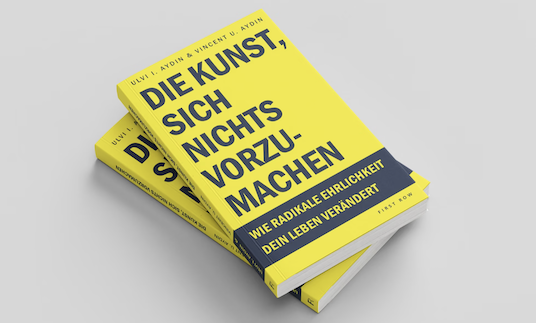
Genau darum geht es in unserem Buch:
„Die Kunst, sich nichts vorzumachen – Wie radikale Ehrlichkeit dein Leben verändert.“
Nicht um Selbstoptimierung. Nicht um Wohlfühlweisheiten. Sondern um den Mut, in den Spiegel zu schauen und sich zu fragen:
Was will ich wirklich?
Was verdränge ich?
Was belüge ich mir schön?
Und was würde ich ändern, wenn ich endlich aufhörte, mir selbst Geschichten zu erzählen?
Vielleicht brauchst du dieses Buch nicht, weil du keine Antworten hast.
Vielleicht brauchst du es gerade deshalb, weil du glaubst, schon alle Antworten zu kennen.
*
Minuten
9 unbequeme Fragen.
Und keine Ausreden! Kein Bullshit! Keine Selbsttäuschung!
Nick Saban – A Leadership Icon I Deeply RespectNick Saban is not just one of the greatest coaches in American football history. For me, he is one of the most impressive leadership personalities of our time.
Seven national championships are not luck. They are the result of discipline, uncompromising standards, accountability, preparation, and relentless execution.That is exactly what I admire about him.Saban does not tolerate excuses. He does not manage by hope. He does not lower the standard because circumstances become difficult. His philosophy is brutally simple: Do your job. Own your responsibility. Execute. Every single day.And most importantly: Stop staring at the scoreboard.You cannot control the final result. But you can control your preparation, your actions, your intensity, and your next move.:devider:That philosophy applies to football. It applies to leadership. And it absolutely applies to sales.Win the next play. Win the next customer. Win the next opportunity. Then do it again. Relentlessly.That is why I deeply respect Nick Saban.:devided:Ulvi's 10 Leadership Principles – Inspired by Nick Saban’ - Applied to SalesTrust the ProcessDon’t obsess about the final result. Focus relentlessly on the actions that create it.Dominate Your AssignmentKnow your responsibility. Own your territory. Execute your job better than anyone else.Standards Over MotivationMotivation comes and goes. Standards remain. Perform at your standard every single day.Execution WinsStrategy gives direction. Execution delivers results. Great plans mean nothing without great execution.Never Become ComplacentYesterday’s success guarantees nothing. Yesterday’s customer does not guarantee tomorrow’s order.Measure What MattersDon’t just measure results. Measure the behaviors that create results. What gets measured gets managed.Correct Mistakes ImmediatelyLosing is information. Understand what went wrong, correct it quickly, and make sure it does not happen again.No Excuses – Take OwnershipStop blaming the market, competitors, prices, products, or customers. Ask instead: What can we do differently?Create AccountabilityEvery action needs an owner. Every owner needs a commitment. Every commitment needs a deadline and a measurable result.Win the Next PlayDon’t mourn yesterday’s loss. Don’t celebrate yesterday’s win for too long. Focus on what comes next: Win the next customer. Win the next meeting. Win the next opportunity. Win the next order. Then do it again.:devider:Don’t obsess about the scoreboard. Obsess about the next action. Execute relentlessly — and the scoreboard will follow.How big is your frying pan?
Bad - average - good - excellent or elite - your decision!
*
Minuten
How big is your frying pan?
Bad - average - good - excellent or elite - your decision!
SALES IS A CRAFT. MASTER IT. Everybody talks about sales strategy. Market strategies.
Growth strategies.
Customer strategies.
Go-to-market strategies. Fine. But even the smartest strategy is worthless if the execution is poor. Sales is not only strategy. Sales is craftsmanship. And craftsmanship means doing the basics exceptionally well. Every day. Again and again. 1. SHOW UP. Go and see your customers. Not only on Teams. Not only by email. Not only when there is an RFQ on the table. Get in front of them. Show genuine interest. Understand their business. Understand their problems. Build relationships. And make one thing unmistakably clear: We want your business. Customers should feel that you are willing to work hard for the relationship. 2. PRIORITIZE YOUR CUSTOMERS. Not every customer deserves the same amount of your time. Cluster them. A. B. C. Know which customers generate your business today — and which customers could generate your business tomorrow. Define priorities. Then define the right actions for every cluster. Who needs a personal visit?
Who needs management attention?
Who needs technical support?
Who needs a call every month? Stop treating every customer the same. 3. PUT A NUMBER ON EVERY CUSTOMER. What is the potential? €500,000?
€1 million?
€5 million? Define it. Then define how much of that potential you intend to capture. Because if you don't know where you want to go, don't be surprised where you end up. Or, as the old saying goes: “No wind is favorable to the sailor who does not know which port he is heading for.” Customer potential without a target is just a number. Give every important customer a destination. 4. BE RELENTLESS. Sales requires persistence. Especially with customers who are not buying from you yet. And especially with customers you have lost to competitors. My rule is simple: Approach them ten times. Call. Visit. Follow up. Bring an idea. Bring an expert. Bring a solution. Come back. Again. Again. Again. Not because you want to annoy them. Because you want them to understand: We want you as our customer. And we are willing to fight for your business. 5. WORK. WORK. WORK. There is no sophisticated substitute for hard work in sales. Do your homework. Prepare your meetings. Know the customer. Know the decision-makers. Know the competition. Know the opportunity. Follow up. Keep your promises. Document what you agreed. Define the next step. And then execute it. That is what I mean by clean sales craftsmanship. Sales success is not created in PowerPoint. It is created through hundreds of disciplined actions in the market. Step by step.
Customer by customer.
Opportunity by opportunity. Strategy tells you where to go. Tactics get you there. And execution separates those who talk about growth from those who actually deliver it. Show up. Be prepared. Be persistent. Execute relentlessly. That is sales.
SALES IS A CRAFT. MASTER IT. Everybody talks about sales strategy. Market strategies.
Growth strategies.
Customer strategies.
Go-to-market strategies. Fine. But even the smartest strategy is worthless if the execution is poor. Sales is not only strategy. Sales is craftsmanship. And craftsmanship means doing the basics exceptionally well. Every day. Again and again. 1. SHOW UP. Go and see your customers. Not only on Teams. Not only by email. Not only when there is an RFQ on the table. Get in front of them. Show genuine interest. Understand their business. Understand their problems. Build relationships. And make one thing unmistakably clear: We want your business. Customers should feel that you are willing to work hard for the relationship. 2. PRIORITIZE YOUR CUSTOMERS. Not every customer deserves the same amount of your time. Cluster them. A. B. C. Know which customers generate your business today — and which customers could generate your business tomorrow. Define priorities. Then define the right actions for every cluster. Who needs a personal visit?
Who needs management attention?
Who needs technical support?
Who needs a call every month? Stop treating every customer the same. 3. PUT A NUMBER ON EVERY CUSTOMER. What is the potential? €500,000?
€1 million?
€5 million? Define it. Then define how much of that potential you intend to capture. Because if you don't know where you want to go, don't be surprised where you end up. Or, as the old saying goes: “No wind is favorable to the sailor who does not know which port he is heading for.” Customer potential without a target is just a number. Give every important customer a destination. 4. BE RELENTLESS. Sales requires persistence. Especially with customers who are not buying from you yet. And especially with customers you have lost to competitors. My rule is simple: Approach them ten times. Call. Visit. Follow up. Bring an idea. Bring an expert. Bring a solution. Come back. Again. Again. Again. Not because you want to annoy them. Because you want them to understand: We want you as our customer. And we are willing to fight for your business. 5. WORK. WORK. WORK. There is no sophisticated substitute for hard work in sales. Do your homework. Prepare your meetings. Know the customer. Know the decision-makers. Know the competition. Know the opportunity. Follow up. Keep your promises. Document what you agreed. Define the next step. And then execute it. That is what I mean by clean sales craftsmanship. Sales success is not created in PowerPoint. It is created through hundreds of disciplined actions in the market. Step by step.
Customer by customer.
Opportunity by opportunity. Strategy tells you where to go. Tactics get you there. And execution separates those who talk about growth from those who actually deliver it. Show up. Be prepared. Be persistent. Execute relentlessly. That is sales.
*
Minuten
Define the Potentials!
Strategy alone doesn't get you where you are supposed to be!
Diese fünf unterschiedliche Managementbegriffe werden (sehr) oft vermischt und dadurch entstehen falsche Entscheidungen .Jede Ausgangslage verlangt andere Maßnahmen, Prioritäten und Führungsmethoden.Wer wirtschaftliche Probleme mit wohlklingenden Begriffen beschönigt, verzögert notwendiges Handeln.Die Kernbotschaft lautet: Probleme klar benennen, konsequent handeln und Ergebnisse nachweisen.:devider:Kurze Übersicht:Die fünf Begriffe nach der AbgrenzungWarum Führungskräfte die Begriffe Change-Management, Transformation, Restrukturierung, Sanierung und Turnaround sauber unterscheiden müssen. Wer sie vermischt, riskiert falsche Entscheidungen und verschleiert die tatsächliche wirtschaftliche Lage. Change-Management ...... bedeutet, Prozesse, Systeme oder Arbeitsweisen in einem grundsätzlich funktionierenden Unternehmen zu verändern, während das Geschäftsmodell weitgehend bestehen bleibt. Transformation ...... verändert dagegen die wirtschaftliche Logik und beantwortet die Frage, womit das Unternehmen künftig sein Geld verdient. Restrukturierung ...... passt Strukturen, Kosten und Abläufe an veränderte Marktbedingungen an und sollte möglichst stattfinden, bevor eine Krise entsteht. Sanierung ...... wird notwendig, wenn die Existenz bedroht ist und Liquidität, Handlungsfähigkeit und Überleben gesichert werden müssen. Turnaround ...... bezeichnet die nachweisbare, nachhaltige Wende zum wirtschaftlichen Erfolg als Ergebnis wirksam umgesetzter Maßnahmen. :devider:Jeder dieser Begriffe steht damit für andere Anforderungen an Führung, Prioritäten und Umsetzung. Die zentrale Forderung lautet: Probleme präzise benennen, konsequent handeln und den Erfolg an tatsächlichen Ergebnissen messen.
Wenn Sie auf "Alle Cookies akzeptieren" klicken, stimmen Sie der Speicherung von Cookies auf Ihrem Gerät zu, um die Navigation auf der Website zu verbessern, die Nutzung der Website zu analysieren und unsere Marketingmaßnahmen zu unterstützen. Weitere Informationen finden Sie in unserer Datenschutzrichtlinie.